Beyond Medication: Hope & Innovation in Epilepsy Treatment
Ronald Franklin had his first seizure at 17 but didn’t have his second for five more years. Epilepsy wasn’t new to his family—his mom and a great-uncle also had the condition. After that first seizure, he started taking medication and remained seizure-free until age 22, when he had a seizure at college.
Doctors added another anti-convulsant medication to his treatment plan, which helped but didn’t fully suppress his seizures. “I was still having episodes, maybe once or twice a year, usually related to lack of sleep or stress,” he said.
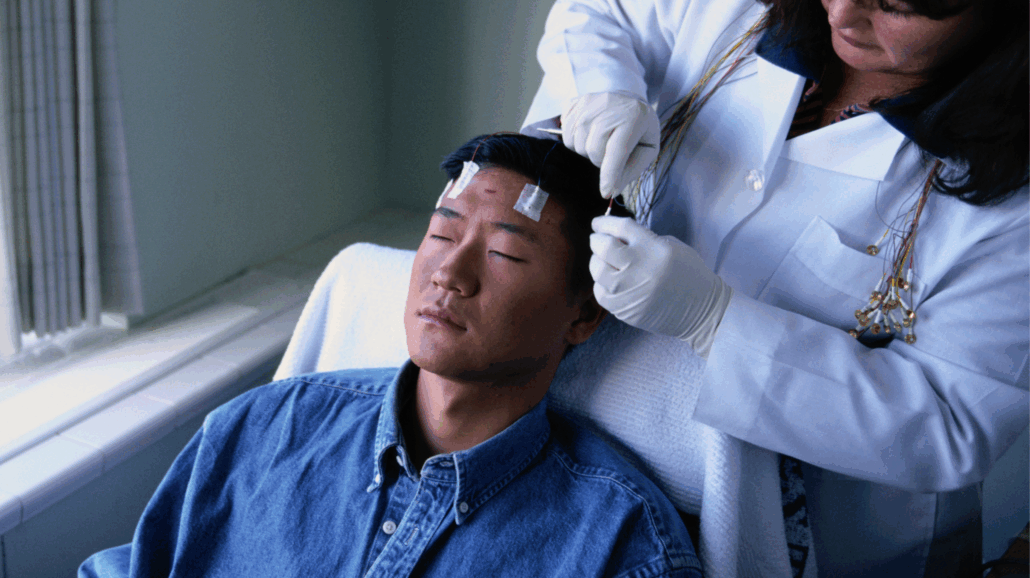
Stress and occasional lack of sleep are still part of Franklin’s life—and so are seizures. Now 35 and the married father of a two-year-old daughter, Franklin works remotely because he can’t drive. And he worries about how his condition might affect his child. That’s why he recently spent a week at the Mayo Clinic undergoing testing to reveal potential new treatment options. “I want my epilepsy to be as controlled as possible,” he said.
His odds are good. Today, “seizure-free without side effects” is a realistic possibility for many adults with epilepsy, said Vikram Rao, MD, PhD, a professor of neurology and division chief of the University of California- San Francisco Comprehensive Epilepsy Center.
“We now have something to offer to every patient that goes through our work up,” said Ezequiel Gleichgerrcht, MD, PhD, an assistant professor of neurology at Emory University who specializes in epilepsy. “We no longer have to say to some patients, ‘I have nothing else to offer you.”
Medication Is Still First-Line Treatment for Epilepsy
Medication remains the first-line treatment for epilepsy, meaning medical guidelines recommend medication is tried before other types of treatments.
There’s good reason medicine is tried first with epilepsy: It works for most people. “Out of every three patients we see with epilepsy, about two will respond favorably to medications,” Dr. Gleichgerrcht said.
There are now more than 30 approved anti-seizure medications, so physicians and patients have alternatives if a patient doesn’t respond well to a certain drug or experiences unpleasant side effects. It may take time and some experimentation to determine which medication (or combination of meds) is most effective for a particular patient, but most adults who continue taking their prescribed anti-seizure medication will not experience additional seizures.
Unfortunately, about one-third of people with epilepsy do not become seizure-free with medication. And research has found that the chance of becoming seizure-free after trying a variety of meds is just 1%.
Surgery: No Longer a ‘Last Resort’
Periodic seizures aren’t simply disruptive to patients’ lives; they’re damaging to the brain.
“We have to remember that uncontrolled seizures also have side effects,” Dr. Gleichgerrcht said. “Ongoing seizures can have cumulative effects on the brain.”
Surgery can help many people with drug-resistant epilepsy. “In well-selected candidates, the chance of seizure-freedom can approach 80%,” Dr. Rao said. That’s a marked difference from the less than 1% chance with meds alone in these adults.
Historically, brain surgery was considered a last-ditch effort, and many patients are still understandably scared of surgery. But epilepsy surgeries have advanced a lot over the past decade or so. For some patients, open brain surgery—which involves cutting open the skull and removing seizure-causing brain tissue—is still the best option.
Other people can take advantage of minimally invasive options, such as laser interstitial thermal therapy (sometimes called laser ablation or LITT) or radiofrequency thermocoagulation. Both techniques use focused energy to destroy the parts of the brain triggering seizures. Physicians use imaging technology during the surgery to ensure they’re targeting the precise locations triggering an individual’s seizures.
Because surgery is such an effective, safe treatment for epilepsy, experts now say it should be considered it should be considered when adequate trials of at least two anti-seizure medications have failed to control seizures fully.. That’s not yet the norm, though.
“The unfortunate reality of epilepsy care is that it still takes patients an average of 15 to 20 years before they are referred for epilepsy surgery, according to published estimates,” Dr. Gleichgerrcht said. That delay means that many people live with seizures far longer than necessary.
Neuromodulation: Brain Stimulation to Decrease Seizures
Electrical stimulation of the brain is another epilepsy treatment option that’s advanced a lot over the past two decades. Instead of removing or destroying the part of the brain where seizures start, doctors implant a small device that sends gentle pulses of electricity to help prevent seizures. It still requires surgery to put the device in, but no brain tissue is removed.
The first neuromodulation device for epilepsy—a vagus nerve stimulator—was approved in 1997. In 2013, the U.S. Food and Drug Administration approved a responsive neurostimulation system (RNS) that delivers electrical impulses in response to abnormal activity in the brain; the device is implanted in the skull, with wires going directly to the part of the brain causing seizures.
The third generation of neuromodulation for epilepsy, deep brain stimulation (DBS), was approved in 2018. (DBS had been used previously—and is still used today—to treat Parkinson’s disease and other brain-based conditions.)
Each of these devices works a little differently, but “all neuromodulation devices have a cumulative effect over time,” Dr. Gleichgerrcht said. It is believed that repeated electrical stimulation gradually helps the brain re-wire itself—which means that patients typically experience fewer seizures as time progresses.
Brain surgery and neuromodulation are highly personalized treatments, tailored to each person’s unique brain activity and seizure patterns. That’s why a full evaluation is recommended for people with epilepsy who continue to have seizures despite medication. Yet just 1 in 5 patients who do not become seizure-free with medication get evaluated at a comprehensive epilepsy center that offers the full range of diagnostic testing and epilepsy treatments.
That’s partly due to access; there are only about 200 Level 4 epilepsy centers (which offer the highest level of care) in the U.S., most in highly populated areas. It’s also because many people living with epilepsy don’t realize how far treatment has come in recent years.
Breakthroughs Ahead
Additional advances are on the horizon. Dr. Rao recently launched a prospective clinical trial of a seizure forecasting app in patients with RNS neuromodulation devices. The application analyzes their brain activity to give patients an estimate of the likelihood that they’ll experience a seizure the next day.
“Just as you fire up a weather forecasting app before you travel to get a sense of what you should pack or do, we think it may be helpful for people to know if they have a 3% chance of a seizure today or a 95% chance,” Dr. Rao said.
The current trial will assess both the accuracy of seizure forecasting and whether patients find the information helpful or anxiety-producing.
Researchers, including Dr. Gleichgerrcht, are also working to develop the next generation of neuromodulation. Combination therapy is giving some patients additional hope and options.
“None of these therapies are mutually exclusive,” Dr. Gleichgerrcht said. “A patient with bilateral seizures—seizures that originate from both sides of the brain—may get laser treatment on one side of the brain and neuromodulation to the other side, for example.”
Ronald Franklin isn’t sure what, exactly, his future holds. Depending on the results of his testing, he may be eligible for and choose to undergo neuromodulation. He’s optimistic, though, because he knows he has more options than his ancestors ever did. His daughter’s generation will have even more.