How Your Vision Works
Sight is much more complicated than many people realize. The “visual pathway”—which is the route that lets light become sight—involves not just your eyes, but your brain too.
Your eyes collect light, but your brain is what actually allows you to see.
“Vision is more than how clearly you see something,” explained Andrew G. Lee, MD, a neuro‑ophthalmologist and chair of the Blanton Eye Institute at Houston Methodist Hospital. “It’s also about the processing of the information: What am I looking at? Where in visual space is this, and what does this mean to me?”
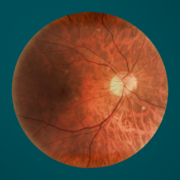
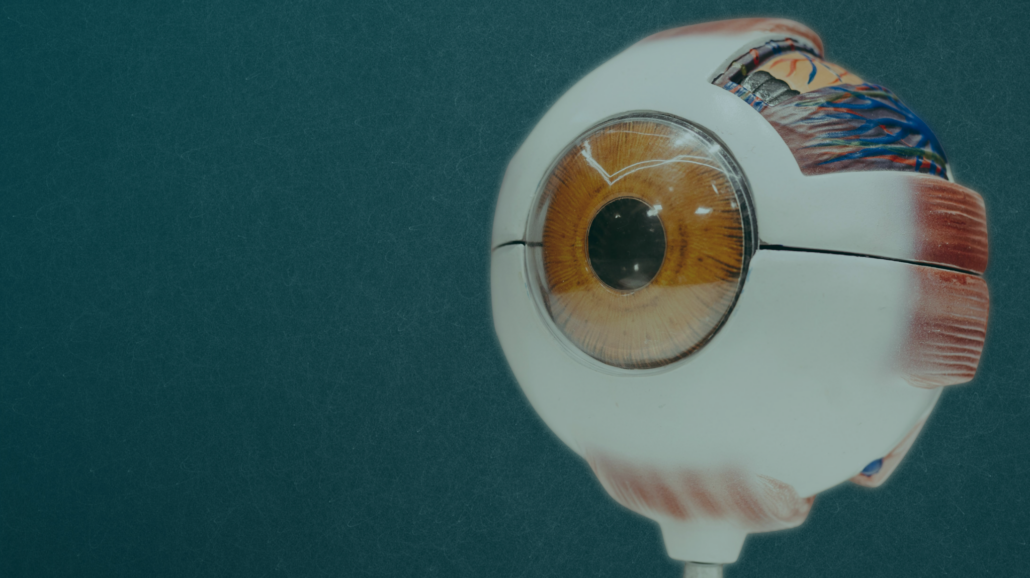
When you look at a car, light reflects off the car and enters your eye through your cornea, the lens. Here, the light is bent and focused onto a thin layer of tissue that lines the back of your eye, the retina.
“The retina is a part of your brain. It’s actually an extension of brain tissue,” said Deborah Zelinsky, OD, founder and executive research director of the Mind-Eye Institute in Illinois.
During early development, the retina grows out from the embryonic brain, so it is considered part of the central nervous system.
The retina contains about 125 million photoreceptor cells—the rods and cones. The rods process the light and motion. The cones process the color and fine detail of the car. This information is turned into electrical signals that travel to the brain through what Dr. Lee described as a telephone cable, called the optic nerve.
The optic nerves reach the occipital cortex, where your brain processes them and turns them into pictures and answers those three questions: What am I looking at? Where in visual space is this? What does this mean to me?
It’s interesting how people process images because not everyone sees things the same way. Looking at the car, you might notice the color and trim, while someone else is looking at the shape and details. Yet another person is watching how fast it’s going, wondering if the car will stop before it gets to the corner.
This is due to your motivation and what attracts your attention, Dr. Zelinsky said. “What you pay attention to depends on who you are as a person. You scan, you aim and focus. And when you focus in, you see details,” she said. This part of vision is called the “afferent system.”
The visual pathway doesn’t stop there. As you’re looking at the car, signals are also traveling from your brain to muscles and other tissues, helping you look from one object to another (the car and the driver maybe), track the car’s movement, and keep your eyes stable on the car as you follow it by turning your head. This is the “efferent system.”
When Something Goes Wrong
From the moment your eye identifies an object to the moment when you’ve interpreted it, there are many places along the pathway where things can go wrong.
The most obvious is damage to the eye through trauma or diseases, such as cataracts, age-related macular degeneration (AMD) and diabetic eye disease. Glaucoma damages the optic nerve, which prevents the signals from getting to the brain.
And then there’s the brain. Head trauma, strokes, tumors and some neurological conditions can disturb how the images are interpreted. They can result in partial or total blindness, double vision or difficulty interpreting what you are seeing, even if it’s a clear image. Damage to the brain could even introduce images that your eye doesn’t see, called visual hallucinations.
While any changes in your vision should be checked, there are several key warning signs that require urgent attention. “The major red flag is ‘acute,’ which is all of a sudden and painful,” Dr. Lee said. “So, if it’s acute and painful red eye, acute and painful bulgy eye, acute and painful droopy eye, acute and painful double vision, or acute and painful loss of vision, all of those are red flags that you need to have an urgent eye exam.”
However, some conditions, like glaucoma, don’t usually have symptoms. This is why it’s important to have regular comprehensive eye exams throughout your life even if everything seems fine, Dr. Lee added.
Your Overall Health and Nutrition
Like all your body’s tissues, the retina and optic nerve need a constant supply of oxygen and nutrients—this can be supported by certain vitamins and minerals. Vitamin A supports the retina in low light, and the B vitamins keep the optic nerve and the brain cells healthy. If they drop too low, vision suffers. So, if someone has too little vitamin A, this could lead to night blindness or a serious condition called xerophthalmia.
Too few B vitamins can cause blurry vision and other nerve problems. Vitamin B12 and folate help maintain the protective covering that surround nerve fibers, including the optic nerve. If their levels are too low for too long, the optic nerve can become damaged.
Another important nutrient is carotenoids. They are naturally occurring plant pigments that give many fruits and vegetables their yellow, orange and red color. They may help protect vision by shielding the macula from damage and slowing down retinal and lens degeneration. It’s this damage that can lead to AMD.
Two large trials, called AREDS and AREDS2, looked at combinations of vitamins and minerals, which many now call AREDS formulations. The results showed that these products can be helpful for eye health, but they’re not a cure, and they’re not for everyone.
“Only moderate dry form of age-related macular degeneration responds to the vitamin supplementation,” Dr. Lee said. “The role of these vitamins in patients who are not deficient or who don’t have any eye disease yet is unproven.”
Protecting Your Visual Pathway
Some risk factors can’t be controlled, such as age and genetics. Chronic conditions such as diabetes, high blood pressure and high cholesterol damage the small blood vessels in the retina and optic nerve. And then, because the retina and optic nerve are extensions of the central nervous system, these conditions can also affect vision.
Good general health habits can go a long way in protecting your vision. Dr. Lee pointed to the importance of eating a healthy diet, getting a moderate amount of exercise and avoiding toxins such as alcohol and tobacco. “These are just general health guidelines for all body health, but especially for ocular health,” he said.
Other steps include paying attention to room lighting. “If you have a computer, iPad or phone, the light pouring into your eyes is going to be different if the room lighting is dark or if the room lighting is bright,” Dr. Zelinsky said.
When you’re on a device, the light from a bright screen causes your pupils to narrow to protect your eyes. But if you’re in a dark room, your brain tries to dilate (widen) your pupils. This creates a conflict, causing strain on your eyes and the muscles that help you focus.
It’s also important to use eye protection for sports and work-related risks, as well as for some everyday activities that could threaten your vision—such as mowing and weed-eating, cleaning with household chemicals, woodworking and using power tools. You should also wear sunglasses outside—even on cloudy days and in the winter—to protect your eyes from harmful effects of the sun’s rays.
Regular eye checkups, including tests beyond the traditional eye chart, and reporting any changes to your sight are an essential part of eye health and protecting your visual pathway.
20/20 Vision Is Just Part of the Story
Most people who hear they have 20/20 vision think their eyesight is perfect. But that test, called the Snellen Eye Test Chart, only measures how well you see small letters straight ahead, at a distance.What the test doesn’t check for:
- How wide your field of vision is—known as your peripheral vision
- How well your eyes work together
- Depth perception
- Motion detection and contrast
- How your brain uses the information
- Eye and other health conditions
Neuropsychologists often evaluate visual processing using tasks that measure attention, spatial reasoning and perceptual integration—abilities that are not captured by a standard eye chart.
“It’s a common misconception that if someone has 20/20 eyesight, then they’re perfect. They might not need glasses to see, but [they may] need them to ‘listen’ better,” Dr. Zelinsky said.
She explained: Some people who are labeled with attention or learning problems may actually have a hidden visual-processing issue or a problem with their eye and ear coordination. This means the visual and auditory systems are out of sync and that holding eye contact takes a lot of effort, which means they don’t have enough attention to listen and understand what is being said. Special glasses can change how light hits the retina, which can shift how a person’s brain organizes the visual space, allowing them to focus their attention better.
“If it’s not easy, you’re not going to bother scanning, aiming or focusing on details,” Dr. Zelinsky said. “Children often appear to misbehave. The parents will say, ‘Look at me when I’m talking to you.’ But some children cannot look and listen at the same time, so they look away in order to listen better. When they look at their parents, they can’t listen.”