Why the World Feels More Intense for Some Autistic People
Take a moment to consider all the sights, sounds and other sensations around you. Maybe there’s an air conditioner humming or a clock ticking in the background. Notice the lights and shadows, the feel of your shirt against your skin, your body weight pushing down against your chair or the floor.
Now imagine you can’t stop noticing those things—and some of them are irritating or even painful.
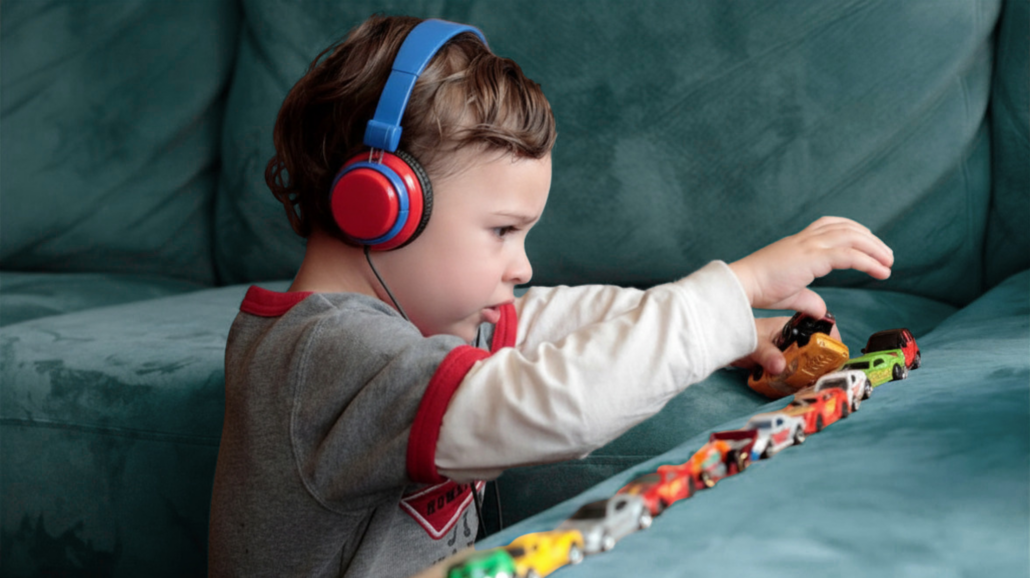
If you’re autistic, you might not have to imagine; this may be part of your regular experience. More than half of autistic youth and adults experience what’s called “sensory hyperreactivity,” or a strong reaction to stimuli in the world around them.
“People often describe the feeling as sensory overload,” said Shulamite Green, PhD, a licensed clinical psychologist and associate professor in the Department of Psychiatry and Biobehavioral Sciences at the University of California, Los Angeles (UCLA). “Their brain feels like it’s on fire.”
A similar experience can occur with emotions, said Kelly Beck, PhD, a licensed professional counselor and assistant professor of psychiatry at the University of Pittsburgh. When autistic people’s needs clash with their environment, managing intense feelings becomes harder.
Sensory processing differences and emotion regulation challenges are common in autism, but not exclusive to it—they can also accompany conditions like ADHD (attention-deficit hyperactivity disorder), or occur on their own. Understanding what drives them can help people get better support.
When the World Feels Like Too Much
When Dr. Green first began working with autistic children in the mid-2000s, an occupational therapist introduced her to sensory tools such as weighted vests and careful control of noises and lights. Yet at the time, most autism researchers were studying only social interaction and communication.
“It seemed like a big mismatch between what parents were noticing, what autistic people themselves were noticing, and what the scientific world was focused on,” Dr. Green said.
In the years since, the tide has shifted, with Dr. Green and others illuminating the underlying brain processes. In 2013, sensory features were added to the diagnostic criteria for autism in the “Diagnostic and Statistical Manual of Mental Disorders, 5th Edition” (DSM-5).
“You don’t have to have sensory differences to have autism, although the prevalence is very high,” said Paige Siper, PhD, chief psychologist of the Seaver Autism Center for Research and Treatment at the Icahn School of Medicine at Mount Sinai in New York City and an associate professor in Mount Sinai’s Department of Psychiatry.
The DSM-5 autism diagnostic criteria describes three types of sensory differences. In addition to hyperreactivity, there’s hyporeactivity, meaning responses to sensory input are delayed. This can be a safety issue if someone doesn’t respond to the sound of an alarm, for example.
The third type is sensory seeking, which is a strong desire to seek out certain inputs, whether that’s touching a specific texture or seeing things from an unusual angle.
These categories aren’t mutually exclusive; many autistic people have some of all three, Dr. Green said.
Typically, the brain filters input from organs such as your eyes and ears, making sense of your surroundings by moving information to the foreground or background and filling in missing pieces. For example, if a shadow passes in front of a tree, your brain calibrates so you don’t perceive the leaves as changing colors.
Dr. Green likens this system, roughly, to air traffic control. If sensations are airplanes, a brain area called the thalamus represents the tower, directing important incoming messages to the relevant parts of the cerebral cortex, where higher-level processing occurs, and to the amygdala, which directs attention. Meanwhile, sensations that aren’t relevant anymore—that ticking clock or humming air conditioner—are grounded, the signals inhibited.
Alterations in this system—say, a shift in neurotransmitter levels—can overactivate the thalamus and interrupt this balance, Dr. Green explained.
These changes appear to begin early. At 6 weeks old, younger siblings of autistic children—who are more likely to be autistic—showed a stronger connection between sensory-related brain areas and networks involved in directing attention, according to Dr. Green’s research with her UCLA colleague Mirella Dapretto, PhD.
By 1 year old, the children were more responsive to sensory stimuli and had less developed social and communication skills.
Sensory differences aren’t always a problem; they can even be a strength. “Some autistic people have been incredible artists because of the way they see the world differently,” Dr. Green said. Autistic scientist Temple Grandin, PhD, has used experiences with sensory hyperreactivity to design tools and techniques that calm animals.
But negative sensory experiences can significantly disrupt life, contributing to anxiety and other issues. “Sensory symptoms are one of the biggest challenges that autistic people and their families face,” Dr. Green said.
The Emotional Toll
Autism is also linked to differences in navigating the internal landscape. About half of autistic people have alexithymia, or trouble identifying or describing emotions. And many struggle with emotional dysregulation, or difficulty managing intense negative emotions and reactions in order to meet goals, Dr. Beck said.
Emotion dysregulation might feel like having your emotions go from zero to 100, reaching an intensity that can culminate in what’s called a “meltdown” or “shutdown.” Once this happens, it can take a long time to calm down. It can also present as having difficulty upregulating emotions, or feeling sad or uneasy most of the time.
Sensory processing differences might contribute to emotion dysregulation—in fact, some people say it’s hard to distinguish between sensory and emotional overload, Dr. Beck said.
Cognitive inflexibility—difficulty adjusting thoughts and behaviors in response to changing circumstances—may also play a role. Dr. Beck is researching the effects of chronic trauma throughout an autistic person’s life.
“Traumatic events and experiences of social adversity, such as being rejected socially or experiencing discrimination or feeling invalidated, may add up and contribute to emotion dysregulation and other mental health concerns,” she said.
The consequences of these challenges can be serious and are often amplified by misunderstandings with neurotypical people. Emotion dysregulation is associated with suicidal thoughts, and autistic people also report being removed from classrooms or losing jobs or friendships after meltdowns.
Both dysregulation and harsh responses to it can also rob autistic people of the chance to connect with positive emotions. Many feel joy related to aspects of being autistic, such as stimming—which are repetitive motions like moving your hands in a certain way, touching something soothing, or watching the same video on repeat. Or they feel joy from spending time absorbed in special passions or interests. Destigmatizing autistic traits and treating autistic people with the love and respect they deserve can help them thrive, Dr. Beck said.
Tools That Can Help
For individuals who have sensory symptoms that interfere with daily life, occupational therapy is often helpful, Dr. Siper said. These professionals can recommend environmental modifications, including tools that may satisfy sensory cravings. Personalized interventions can help build coping skills to regulate sensory responses and make everyday environments more comfortable.
Dr. Green’s lab is also testing new approaches to address the causes. One potential approach to help kids create emotional distance is to have them describe sensory stimuli as if they were a news reporter, rather than explaining how sensations make them feel.
The researchers are also studying the use of transcranial magnetic stimulation—tiny, magnetic pulses delivered non-invasively to certain brain regions. Both have shown promise in reducing potentially distressing brain responses.
For emotion regulation, counseling and therapy are often effective, sometimes with modifications. Dr. Beck and several colleagues developed the Emotion Awareness and Skills Enhancement (EASE) Program, a mindfulness-based intervention that helps autistic youth and young adults recognize and manage intensifying emotions.
Dr. Green is also aiming to help change the environment for autistic people. One of her projects involves partnering with school districts, training faculty and staff to support students with neurodevelopmental disabilities. For example, teachers could choose to assign learning groups for classwork in advance, rather than asking students to pair up on the spot, which can be stressful for those with social differences. Putting covers on fluorescent lights and decluttering learning spaces could reduce sensory stimuli and make classrooms more conducive to learning.
The goal is not to make autistic people’s experiences look more like everyone else’s, or to single them out for special treatment. Rather, it’s to make sure everyone has the tools and support to flourish as themselves.