
FTD: The Most Common Form of Dementia Under Age 60
Frontotemporal dementia (FTD) is a type of dementia most people haven’t heard of—unless you remember it as the disease that actor Bruce Willis was diagnosed with. But, little known as it might be among the general public, FTD is actually the most common cause of dementia in people under age 60. And, it affects as many people in the 45–64 age group as Alzheimer’s disease does.
But FTD can act a bit differently than Alzheimer’s, especially in the early days, and treatment is not as far along as Alzheimer’s disease, which has had some promising treatments lately.
BrainWise recently interviewed neurologist and FTD expert Bruce L. Miller, MD, who is the A.W. and Mary Margaret Clausen Distinguished Professor in Neurology, director of the Memory and Aging Center, and founding director of the Global Brain Health Institute, all at the University of California, San Francisco (UCSF).
This Q&A has been edited for length and clarity.
BrainWise: How do you explain frontotemporal dementia to patients and families?
Bruce L. Miller, MD: Frontotemporal dementia is a neurodegenerative disease. That means that specific parts of the brain start to lose their function. It is progressive and eventually, like all neurodegenerative diseases, will lead to death. There are major subtypes of frontotemporal dementia that differ based on the type of symptoms people have. One thing that is common for all of the frontotemporal dementias is that they selectively affect circuits in the front part of the brain, in the frontal lobes and the anterior temporal lobes.
What are the symptoms of FTD, and how do they differ from Alzheimer’s?
Both are neurodegenerative diseases. Alzheimer’s disease tends to present later in life. Frontotemporal dementias often present when people are in their 50s or 60s. The rates of Alzheimer’s disease increases with every decade, so many of the cases we see are people in their 80s or 90s.
Alzheimer’s disease hits different parts of the brain. It tends to attack our memory systems, so people become very forgetful. Frontotemporal dementia attacks systems involved with behavior. So, initially in the behavioral variant of frontotemporal dementia, we see people who lose drive, who become disinhibited, socially inappropriate, less empathic to people around them. And that’s a very different pattern than we see with Alzheimer’s disease.
With frontotemporal dementia that hits the left side of the brain—the progressive aphasias—you have trouble initially with speech or language. There are language variants of frontotemporal dementia that begin with difficulty generating language (the nonfluent variant of primary progressive aphasia) or finding and understanding the meaning of words (semantic variant of primary progressive aphasia).
People with frontotemporal dementia get executive dysfunction, so they have trouble with organization, planning, shifting focus or attention.
We see changes in personality. People become less kind, less curious, less interested in their children or grandchildren. They’re addiction prone, so the first manifestation may be heavy drinking, abuse of drugs, overeating. They become apathetic, very disinterested in the world around them, less interested in doing social things. They become more immobile, walking less, moving less.
These behavioral-type symptoms seem like it would make it difficult to recognize symptoms.
That’s right. When one of our loved ones starts to have trouble with movement or memory, we immediately think about the brain and a neurodegenerative condition in the old and very old. But when we see a change in behavior, a lot of times we don’t think about the brain; we think about something related to the environment—a midlife crisis, stress, alcohol abuse, things like that—rather than realizing that the behavioral symptoms are the disease. The symptoms reflect where the disease attacks the brain, and our behaviors are very much generated through the frontal and anterior temporal lobes.
Alzheimer’s disease is so well-known. Why have people never heard of frontotemporal dementia?
I think that is changing. Alzheimer’s disease had a 30-year head start of awareness. In the ’70s, people were already talking about Alzheimer’s as the major neurodegenerative condition. And I think in that good process, people forgot about all the other causes for degeneration of the brain later in life.
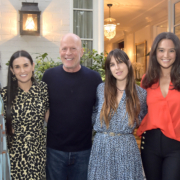
One of the things that will change this is that we have a great spokesperson for the first time, Emma Willis, and she is an extraordinary leader. Having her talk about her journey with this, with such a beloved actor, Bruce Willis, is starting to change people’s awareness.
There are major efforts to make people aware of this condition. I’m very grateful to Diane Sawyer and her team at ABC, who put together a special on frontotemporal dementia. In the arts, Jake Broder has put together a play about frontotemporal dementia called “UnRavelled.”
Why is it important that people receive a specific diagnosis, not just “dementia”?
These diseases are caused by different molecular processes. That means there are different molecules or proteins in the brain that are responsible for Alzheimer’s that are different than those responsible for frontotemporal dementia.
There are different genetic causes. Frontotemporal dementia is very strongly genetic, but not all cases are genetic, and increasingly our treatments are focused on those molecules. So it’s not OK to just call something “dementia” when it might have a very specific genetic cause, and even a treatment for that genetic cause.
In the case of Alzheimer’s, we have very specific treatments for lowering amyloid in the brain. So, you want to make sure you get the diagnosis of Alzheimer’s disease early, if that’s what it is, because that’s when these treatments are effective. It’s important for a wide span of reasons.
How is FTD diagnosed?
We diagnose this clinically. If there’s a strong family history, we look for the genes that might be causal for the frontotemporal dementias, but predominantly it’s a patient’s history and imaging. MRI scans are fairly characteristic in people with frontotemporal dementias. If it’s a behavioral variant, we see bilateral frontal temporal atrophy. If it’s a language variant, we see more atrophy on the left side of the brain, in the front.
How is FTD treated—and what could future treatments look like?
We think very broadly about treatment. We begin to think about the family—how can we help the family? There are often legal problems that need to be addressed. Many patients with frontotemporal dementia spend all of their money, get cheated and scammed, so we need to make interventions immediately to protect the patient and their family.
We focus a lot on the addictions that happen with frontotemporal dementia, so we think about whether we can change the environment and make it less likely someone will be finding alcohol or drugs.
Emma Willis has talked about the roadmap that families need, and we’re trying to develop, with her oversight, a roadmap that we will offer to every family with this.
There are medications that can be mildly effective. We try in some people serotonin antidepressants that can help with irritability, sadness, sometimes overeating, sometimes addictive tendencies.
There’s a slew of new therapies that are emerging focused on the tau forms of frontotemporal dementia. Adam Boxer and Julio Rojas at UCSF are working on tau-lowering compounds, antibodies and other approaches that will soon be in place across the country. Then for the genetic forms, people are beginning to think about ways of changing the genes. This would be CRISPR, and although we don’t have CRISPR therapies yet, these are under active development.
I’m also very excited about the use of artificial intelligence (AI) to help the average person in the clinic improve diagnosis. We have a real expert at UCSF, Pedro Pinheiro-Chagas, and he’s worked with Andrew Breithaupt at Emory. The two of them are thinking of ways of offering clinicians questionnaires that will help predict with a high degree of certainty, not only that this is frontotemporal dementia, but even the molecular subtype. I think AI is very promising and could transform diagnosis. We think most people are never seen with frontotemporal dementia, or when seen, are misdiagnosed.