Understanding Autism
For many autistic people, autism represents an integral part of their identity. In the public conversation, autism has dominated headlines in ways that often don’t align with science or people’s lived experiences. To researchers and clinicians, autism appears as a complex set of behaviors and characteristics that they continue working to understand and support.
This Autism Acceptance Month in April 2026, BrainWise is looking at several different aspects of autism, starting with a basic overview of the condition.
What Is Autism?
“Autism is a developmental disability,” said Steven Kapp, PhD, a developmental psychologist and senior lecturer in psychology at the University of Portsmouth in the United Kingdom, who is autistic. “It affects how people move, sense, perceive, think and how we communicate.”
The “Diagnostic and Statistical Manual of Mental Disorders” (DSM) is the guide used by clinicians and researchers to diagnose and classify mental disorders. In the fifth edition, known as DSM-5, published in 2013, autism has been defined as a spectrum disorder. This reflects the varied ways the condition affects people and the type and degree of support they need, which may fluctuate over time and across contexts. For example, some autistic people need help with most daily tasks, while others require little assistance.
“If I have 100 kids come through my door with an autism diagnosis, I’m going to have 100 different kids, 100 different profiles,” each with unique needs and strengths, said Talin Babikian, PhD, associate clinical professor in the Department of Psychiatry and Biobehavioral Sciences at the David Geffen School of Medicine at the University of California, Los Angeles.
The understanding of autism has evolved in recent years, through research and the neurodiversity movement. Autistic advocates have pushed for a shift away from viewing differences as deficits, toward understanding how people with different neurotypes experience the world.
The condition can bring strengths too—for example, some autistic people with less speech have perfect pitch, Dr. Kapp said. Others have deep interests and attention to detail that help them excel in math, science or the arts.
But especially in a culture and environment designed for neurotypical people, those strengths can also cause challenges. For example, someone who’s hyperfocused on a particular task may neglect sleep or other health-promoting behaviors. Better understanding their unique characteristics can help autistic people get the support they need, said Dr. Kapp, whose career bridges academia and activism.
Signs of Autism
The signs of autism typically first appear by age 2, although many children aren’t diagnosed until later. The signs fall into two broad categories:
- Social communication and interaction skills. Autistic children may avoid eye contact and don’t always show emotion through facial expressions, or their expressions might not seem to fit the socioemotional context. They may not join in play with others or show things to caregivers. Parents and clinicians might also notice language delays.
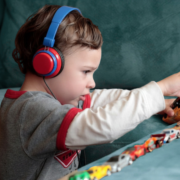
- Restricted or repetitive behaviors or interests. Kids may repeat words or phrases, play with toys the same way each time, or focus on parts of objects, such as wheels on cars. Often, they flap their hands, rock or spin, behaviors known as stimming. Many are more sensitive to bright lights, sounds, textures and temperatures.
These features evolve with age, said Heather Hazlett, PhD, a licensed psychologist and assistant professor in the Department of Psychiatry at the University of North Carolina School of Medicine.
Autistic adults may have strong interests in specific topics, stick closely to routines and continue stimming, perhaps by humming or playing with their hands or sensory tools. They may not follow the same social rules as others or the back-and-forth pattern of conversation; some may not use words at all.
How Autism Is Diagnosed
There’s no simple blood test or scan for autism. Instead, a neuropsychologist, clinical psychologist, developmental pediatrician or other specialist—sometimes as part of an interdisciplinary team—conducts an evaluation. This typically includes talking to the person and their family, asking about their developmental and family medical history, and using standardized tests and tools or structured questionnaires to look at behavior.
Meeting the DSM-5 criteria for autism spectrum disorder requires deficits in three areas of social communication and interaction and two of four types of restricted, repetitive behaviors.
Because autism is complex and varied—and many other conditions can cause similar symptoms or happen at the same time—the process can sometimes feel more like a “diagnostic journey,” Dr. Hazlett said.
An autism diagnosis can unlock services and resources. For children, it opens access to early intervention and education support; adults can gain self-awareness, workplace accommodations, and community.
“ There are problems with the medical system, of it being deficit-only and that the professional and outsider know best,” Dr. Kapp said. “But also, there are benefits of diagnosis, and it’s the system we have.”
Causes of Autism
To try to learn what might cause autism, researchers continue to study the underlying mechanisms. But they know there’s likely no single explanation. “It’s like asking, what is the underlying physiology of cancer and what is the prognosis of someone with that diagnosis?” Dr. Babikian said. With either condition, there are too many variables to point to one cause or a clear, simple answer.
Genetic factors likely play a role for most people—currently, more than 200 genes have been linked to autism, Dr. Hazlett said. The younger sibling of an autistic child is about 10 to 20 times more likely than others to be diagnosed as autistic. When Dr. Hazlett’s team studied these siblings from infancy, they found differences from people without a family history of autism. For example, children with a family risk of autism had larger total brain volume (compared to those without a family history) that was driven by early expansion of brain surface area during the first year of their life.
While vaccines are sometimes accused of causing autism, numerous studies and expert groups, including the World Health Organization and the American Academy of Pediatrics, have long discredited that claim.
The Increase in Autism
Today, 1 in 31 children by age 8 has been diagnosed with autism spectrum disorder, according to the Centers for Disease Control and Prevention. That is an increase from 1 in 36 in 2020 and 1 in 68 in 2010. Diagnoses among young adults are also increasing, according to a study published in 2024 in JAMA Network Open.
However, this increase doesn’t necessarily mean the condition is occurring more often. It could be that autism is being diagnosed earlier or more often. Pediatricians now screen for autism at 18- and 24-month check-ups, and greater public awareness is prompting more families and individuals to seek evaluations, Dr. Hazlett said.
In addition, when the DSM was updated in 2013, several other diagnoses—including Asperger’s syndrome—were folded into autism spectrum disorder. While some people may still identify as having Asperger’s, that term isn’t used clinically, which affects the statistics.
Supports and Services for Autistic People
Support for autistic people looks as different as those who need it. For young children, early intervention can help support social and communication development, Dr. Hazlett said.
Components might include speech-language, occupational, recreational and behavioral therapy. Tools such as picture boards and speech-generating devices can aid communication. Medication may treat co-occurring disabilities, such as anxiety or hyperactivity.
When available, an assessment from a neuropsychologist can play an important role in charting a path. “A comprehensive evaluation provides a roadmap to what needs addressing,” Dr. Babikian said, “and equally important, rules out things that are not relevant for that child.”
For older kids, teens and adults, group therapy can support social skills, while organizational strategies might help with executive functioning—which is a set of everyday skills like planning and solving problems. Vocational training, assistance with tasks of daily living, and ongoing counseling might be beneficial for some.
Even if people have quite significant disabilities, Dr. Kapp said, the goals should be similar: to use communication that works for them, help them live in the community and form meaningful relationships, and provide them supported decision-making to be as self-determined as possible.