
Voices of Alzheimer’s Aims to Empower People Living with Alzheimer’s Disease
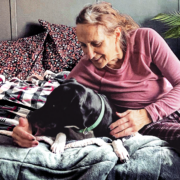
In 2012, Geri and Jim Taylor were stunned when Geri was diagnosed with mild cognitive impairment, which would later become Alzheimer’s disease. She was 69. But an early diagnosis and treatment for her symptoms allowed Geri to live a full, joyous and meaningful life for several more years. A retired health care CEO, she became an advocate for Alzheimer’s disease awareness, research and treatment.
Ten years after her diagnosis, the Taylors were asked to lead a new patient advocacy organization, Voices of Alzheimer’s. Jim was named CEO, and Geri was on the board for a year. Then, after 12 years of living with Alzheimer’s, Geri died in August 2024.
BrainWise recently interviewed Jim Taylor, who continues as CEO of Voices of Alzheimer’s, about his wife, what Alzheimer’s looks like today, and what he wants people to know about caregiving.
This Q&A has been edited for length and clarity.
BrainWise: Tell us a bit about Geri. What do you want people to know?
Jim Taylor: Geri was a remarkable individual. She grew up in New York City and Long Island. She couldn’t afford to go to [a four-year] college, even though she was a good student, a very smart lady. She went to nursing school and became a nurse. Her first job was as a visiting health nurse in Harlem, when it was not a safe neighborhood, but that didn’t impede her.
She went to night school and got an undergraduate degree at Hunter College and then a master’s in public health from Columbia University. So, she was a lifelong learner. From her nursing background, she went into research and ended her career as the CEO of the largest long-term care facility in New York City at the Beth Abraham Center.
Geri was very much a person who took health care to heart. She had a big heart, but she was also a no-nonsense, efficiency-driven individual who wanted to make progress. At the same time, she didn’t bring her problems home. She very much was present and a loving mother and grandmother and spouse.
Being a nurse and then CEO at a long-term care facility, did she notice some of her cognitive issues earlier than she might have otherwise?
Absolutely. People who are very intelligent, who are lifelong learners, have what we call cognitive reserve, which is kind the mental capacity to compensate for memory loss in the early stage of the disease. I noticed nothing, absolutely nothing, but she was telling me that she had some cognitive impact, that she would lose her train of thought in staff meetings, or that she got off the subway at the wrong stop and couldn’t figure out where she was.
Finally, she looked in the mirror one morning and didn’t recognize her face, which is an unusual early-stage symptom. So we went to the neurologist together. I just thought he was going to tell her it was normal aging, but in fact, it was not. He diagnosed her in 2012 with mild cognitive impairment, which most frequently is a precursor to Alzheimer’s disease.
How did you and Geri respond to the diagnosis?
We were retired, and we had said we would love to do a project together, but nothing really developed. All of a sudden, the project found us. Geri was passionate about health care, so it was a natural transition for her to become a poster girl for Alzheimer’s. That led to an incredible 12-page New York Times article in 2016 about Geri’s Alzheimer’s disease.
For me, I was an IBM finance guy; I had never really been passionate about my work, but health care and taking care of people is compelling, and I became very passionate about that work. The other thing is is that I had lived within my comfort zone most of my adult life. I hadn’t been a risk taker, and I decided when Geri was diagnosed that I was going to step out of my comfort zone and make this as rich an experience as we could. It was not the retirement I had hoped for or wanted, but I didn’t get a choice, that’s what I had.
How did Voices of Alzheimer’s come about?
We had been very active nationally in advocacy, and in 2022 an individual called and asked Geri and me if we would be co-founders of a new organization whose mission would be to bring the patient voice more directly into conversations with Medicare, with the FDA. Of course we said, “absolutely.” In a subsequent meeting, I realized that the intention was for me to become the CEO. I was a bit surprised; I had no idea what I was getting myself into it, but what a huge compliment. That individual realized the capacity Geri and I had to create a very formative organization. Geri was still in the moderate stage at that point. She was on the board for a year, and then stepped down, and then a year later she died.
How do people in the U.S. think about Alzheimer’s differently since Geri was diagnosed in 2012?
I think there’s increasing visibility of people earlier and earlier in the disease progression. We tried to set an example for that by being totally open about Geri’s diagnosis and doing that New York Times article—once you do that, there’s nothing you can hide.
We in the dementia community experience significant stigma. Also, people hide their diagnosis for as long as possible. The societal view of dementia and Alzheimer’s has been primarily the late stage—people need to be taken care of, and people can be aggressive and unpleasant. And that view is because people hide their symptoms as long as possible because of the stigma. But the process of dementia and Alzheimer’s is very long. You begin by just being a little more forgetful.
Geri began that journey, and 12 years later she died—eight to 10 of those years she was a very productive member of society. We were traveling across the U.S. and making presentations. We went to Europe and made presentations. We were trying to encourage people to live well after their diagnosis, to choose not to sit home on the couch and feel sorry for themselves, but to get out there and participate in society and really make a contribution and be an example of what people with a chronic illness can do.
I think we’re beginning to see two things happen: that people are more comfortable coming out and that society is beginning to be more accepting. I rarely meet someone who hasn’t been touched by Alzheimer’s, if not in their families, perhaps their friends. We all know this disease. We realize it’s a very challenging situation, but I believe it’s becoming much more open. I believe the stigma is beginning to mitigate. And that’s tremendous.
What do you want people to know about caregiving?
I get very annoyed when I hear researchers talk about the “caregiving burden.” They don’t talk about “caregiving opportunities.” The first three to four years, Geri didn’t need any help from me, and for people to refer to me as her “caregiver” was offensive.
One of the biggest jobs of a caregiver is to help the individual they’re caring for maintain their self-worth, their dignity, for as long as possible. This disease eats away at your self-respect. It takes a little bit of your person away every day. I did everything I could to try to
reinforce Geri’s selfhood—I called myself a “care partner.”
Late-stage Alzheimer’s care is very difficult—you’re a “caregiver” at that point. But throughout this journey, our caring attitude is so important—our attitude about what we can positively do for ourselves and our attitude that we transfer to the person we’re taking care of. If we don’t have a good attitude, how can the patient possibly have a good attitude?
The one very, very important thing to remember to tell care partners is you have to take care of yourself first. The research continually and consistently shows that people who are caretakers, as opposed to their peers who are not caretakers, have poorer health outcomes. That’s because their lifestyle is diminished because they’re putting the other person first. We have to be more thoughtful about taking care of ourselves, keeping our own medical appointments, going to the dentist.
And—I don’t like the term—but the “peripheral care partners” really need to support not only the patient, but the care partner, the caregiver, and encourage them to take care of themselves. They can help by providing respite, coming in and helping so that the care partner can get out and get a break. Sometimes I had a very hard time asking for help. I didn’t build the support network that I needed, and that was, looking back, a very critical mistake on my part.
Tell me about the Bill of Rights for People Living with Alzheimer’s Disease.
In 2023, Voices of Alzheimer’s launched the Bill of Rights, which was created by people living with Alzheimer’s and care partners to ensure ethical treatment and other considerations. We outlined 10 rights.
One of the tenets states that no one living with Alzheimer’s should find themselves without insurance coverage. Those who are diagnosed before age 65 and are not yet on Medicare are forced to wait two and a half years after diagnosis before becoming eligible for Medicare coverage. But treatment and care in those first two years are critical. We now have treatment—huge breakthroughs—with disease-modifying drugs that slow the progression in the early stage of the disease.
In December 2025, we were able to introduce a bill in the House of Representatives called the BRIDGE for Young-Onset Alzheimer’s Disease Act, which would expedite access to Medicare coverage for those with young-onset Alzheimer’s disease. We hope to get it introduced in the Senate [this year].
One of our other tenants is that we have the right to anticipate that everyone in a medical setting has been trained to at least recognize and interact with somebody with Alzheimer’s dementia. Emergency rooms are particularly difficult—the nurses and doctors often have been trained, but the rest of the medical team hasn’t. We believe they should be required to take a three-hour course on how to interact with somebody with dementia. Because it’s not the same—they’re frightened to be there, they’re more easily alarmed, they need a little more compassion. Voices of Alzheimer’s has been invited to participate in several national reevaluations of care in emergency rooms, especially how people who have cognitive impairment should be treated. That’s great.
What else do you want people to know about Alzheimer’s disease?
The message I would like to get out is that we have treatment. And treatment is time dependent. The earlier you become aware of cognitive symptoms, the better your chances are that you can lengthen the best part of your life that remains.
People 65 and over are entitled to an annual physical, which includes a cognitive evaluation. We have the right to that annual evaluation, so we need to advocate and be our own caretakers of our brain. That includes living a healthy lifestyle, but also insisting on a cognitive evaluation. That’s one of the things VOA is focusing on right now: Treatment is important. It needs to be early. And take care of your brain.