
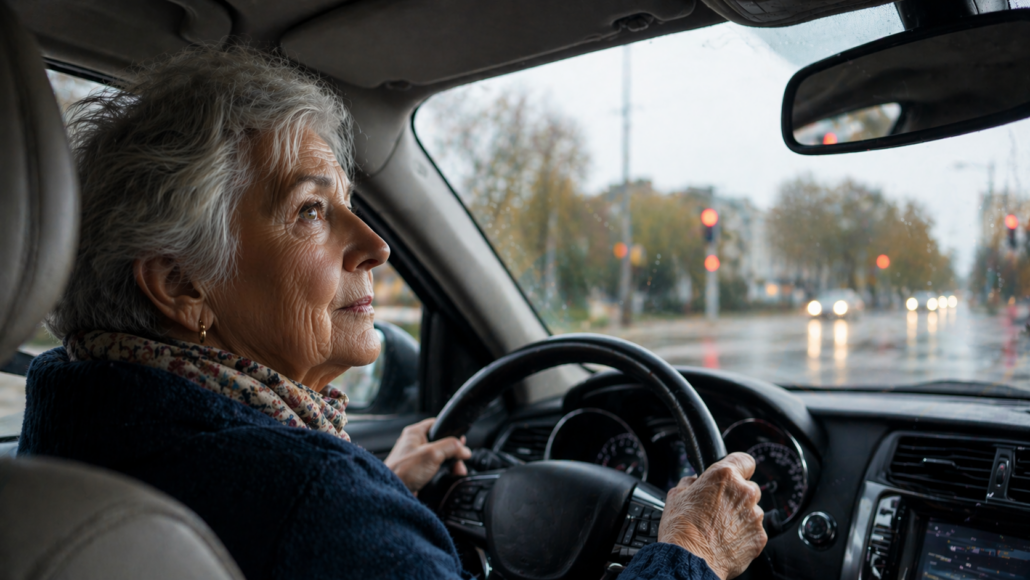
Is It Time to Stop Driving?
By the time you’ve been driving for several decades—ever since you were a teen or young adult—you may take it for granted. But as you age, your brain ages too, and that can affect a myriad of factors that help you navigate the road safely.
“The fact is your 75-year-old brain is not the same as your 30-year-old brain,” said Daniel Marson, PhD, JD, a clinical neuropsychologist, licensed attorney and professor emeritus of neurology at the University of Alabama at Birmingham.
That means you may reach a point where you need to ask yourself if it’s still safe to get behind the wheel—or at least limit where and when you drive.
What Happens as You Age?
Age can affect a number of functions necessary for driving, including your vision, memory, motor skills and executive functioning (ability to multi-task, divide attention, prioritize, plan, reason, etc.). Understanding these changes and how they affect you can help you make more informed decisions about your driving habits.
“What we often see clinically is reduced processing speed and more difficulty dividing attention, so tasks that used to feel automatic, like tracking traffic while navigating, require more effort and become less reliable,” explained Evan T. Schulze, PhD, a clinical neuropsychologist with NYU Langone. “Judgment can also be affected, which matters in situations where timing and decision-making are critical.”
Even if your eyesight is still pretty good, it may take longer for your brain to understand what your eyes are seeing.
“In some cases, there are also changes to how the brain interprets visual information, which can make it harder to judge distance or respond appropriately and at a moment’s notice to what’s happening on the road,” Dr. Schulze said.
The results of a recent study in the Journal of Road Safety suggest that aging also affects the process of wayfinding (being able to navigate to a place), especially in unfamiliar areas, which demands more cognitive functioning. If you have to devote more of your attention to wayfinding, it can distract you from your primary task of driving the car.
The National Highway Traffic Safety Administration also encourages older adults to consider how medical conditions may hinder their ability to drive safely. For example, sleep apnea, glaucoma, macular degeneration, a history of stroke, Parkinson’s disease and other conditions may affect your ability to drive safely.
When you consider factors such as fading eyesight, a slower reaction time, slower processing speed, and possibly some uncertainty about finding your way around, you may want to consider giving up the car keys.
Signs to Watch Out For
There’s not a set age when you need to stop driving. But you need to have some self-awareness, Dr. Marson said.
“Be mindful of changes that you see in your ability to confidently drive,” he said. For example, you might realize that you no longer feel comfortable driving at night or on the interstate. Driving situations you once handled with ease may now make you anxious.
Family members can watch out for signs, as well as tag along as passengers to observe someone’s driving skills firsthand. There are also senior-specific GPS driving apps that can monitor speed and location and include crash detection and alerts.
Other warning signs to watch out for include:
- More frequent close calls with other vehicles
- Having frequent fender-benders or accidents, or more minor scratches and dings
- Trouble staying in your lane
- Getting lost even on familiar roads or areas
- Other drivers honking often at you
- Trouble reading highway or street signs
- Trouble seeing lane lines and pavement markings
- Not seeing or not obeying signs and traffic signals when driving
- Getting the gas and the brake confused or having trouble shifting between them
- Going too fast or too slow for traffic or hitting the brakes for no reason
- Getting overwhelmed or newly anxious in heavier traffic or challenging driving situations such as detours or construction
“In some cases, like Alzheimer’s disease where memory decline is often the primary symptom, there can be increased risk for getting lost, especially when driving in less-known areas,” Dr. Schulze said. “Even in such cases when the individual has been driving the same route for decades, should a new detail arise, such as construction requiring a detour, the ability to quickly and safely reroute may be more difficult and increase the risk of losing one’s way.”
Dr. Schulze cautioned that not everyone has the necessary insight to make the call, especially people with neurodegenerative conditions. “So the person may genuinely believe that their driving is unchanged, even when others are seeing clear differences,” he said.
How to Have the Conversation with Older Parents
It can be hard to convince someone else who doesn’t want to give up their independence that it might be a good idea to limit their driving. Giving up car keys and the management of their own finances are two of the biggest challenges older adults face, with regard to the aging brain, according to Dr. Marson.
Starting this conversation is a task that often falls to the adult children of older adults. But how do you broach a potentially sensitive conversation with someone you love?
“If you feel that your parent or an older adult friend or relative is not safe to drive but they believe otherwise, encourage them to be assessed by their health care provider,” said Sakina Ouedraogo Tall, MD, a geriatrician with NYU Langone. “It is probably best to discuss first with the health care provider they trust the most.”
Here are a few other strategies to make it easier:
- Start early, if possible. Ideally, you want to begin talking about the issue before it’s actually necessary so that you’re on the same page.
- Don’t go it alone. You don’t want your parent or relative to feel like you’re ganging up on them, and it may help if they understand there’s a consensus among family members. Get their health care provider involved as a neutral third party.
- Express your concern. Let them know how important they are to you—and that their safety is paramount to you. Emphasize how they need to be safe on the road so they don’t harm other drivers, pedestrians or cyclists.
- Consider a driving test. “You could say, ‘I’m becoming concerned about your ability to drive. Would you be willing to do a driving test to make sure that you and other people on the road are safe?’” Dr. Marson suggested. Be aware that while departments of motor vehicles will likely offer tests for free, they will revoke a person’s driver’s license if they fail. You may want to investigate local driving schools for help, though those cost money.
- Offer empathy. Acknowledge that you understand that your loved one may have some reservations about giving up their independence. Reassure them that they won’t be a burden on anyone—and that you will help them find ways to get to where they need to go.
- Offer alternative transportation options. No one wants to be stranded at home, especially if they have an active life. Where available, add phone numbers for local taxi companies into your loved one’s phone and/or download rideshare and taxi-hailing apps and help them set up accounts. Other options may include traditional public transit, senior vans or shuttle services offered through local senior centers, and organizing rides with friends or family.
Some older adults are aware of their limitations and have the insight needed to gradually begin limiting their driving as they age. “Thus, giving up the car keys can also be a gradual and successful process over time,” Dr. Marson said.